


Organic Cotton Terry Hoodie
Sold Out
Material: 100% COTTON
*Model height 182cm / Wearing size 3
A loopwheel fleece sweatshirt made using two-ply organic cotton yarns, preserving the natural, undyed character of the fabric.
Based on Graphpaper’s standard Hoodie silhouette, the fabric is knitted on traditional loopwheel machines using the same yarn throughout all three layers of the fleece construction. This process enhances both softness and resilience, creating a comfortable feel designed for long-term wear.
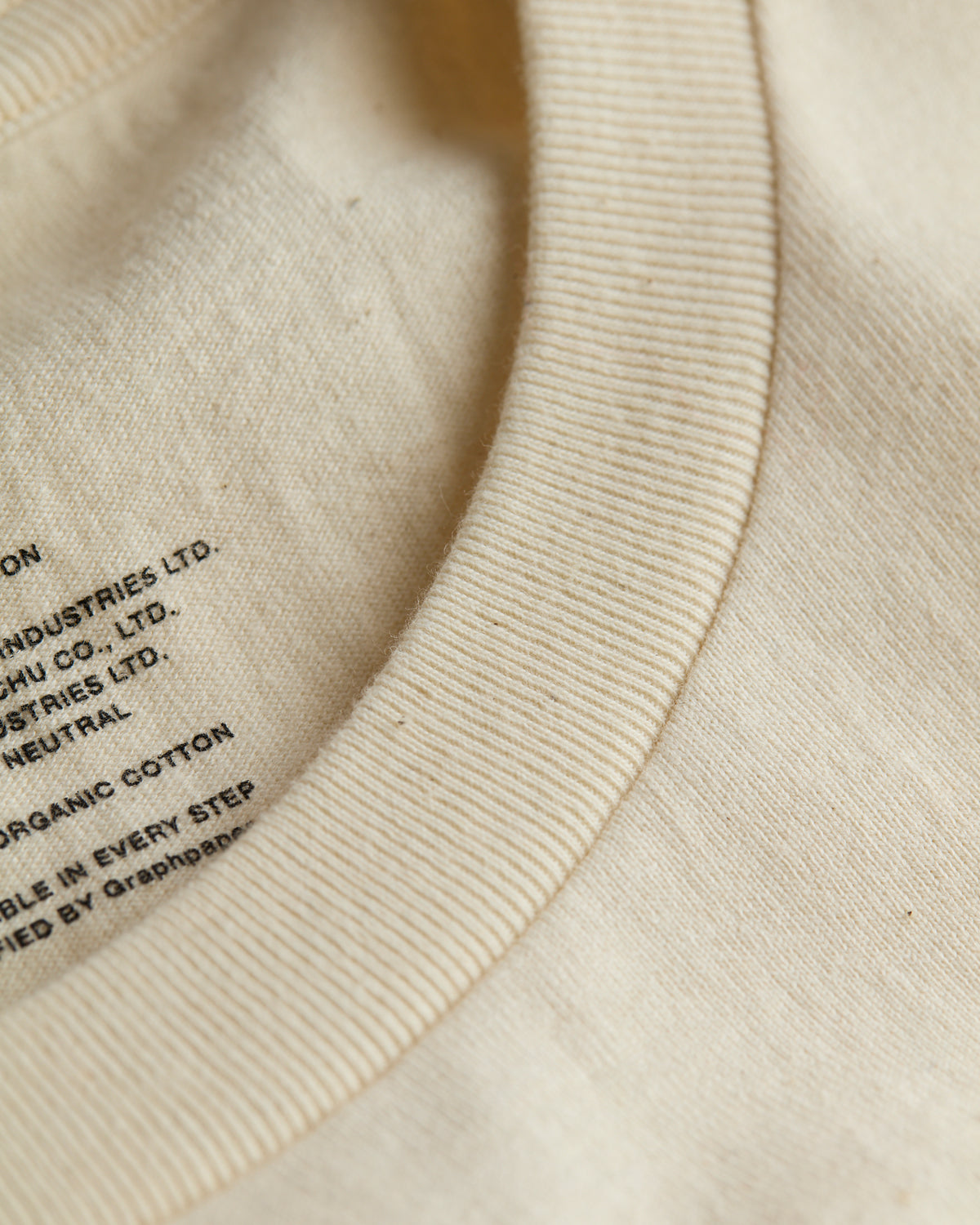
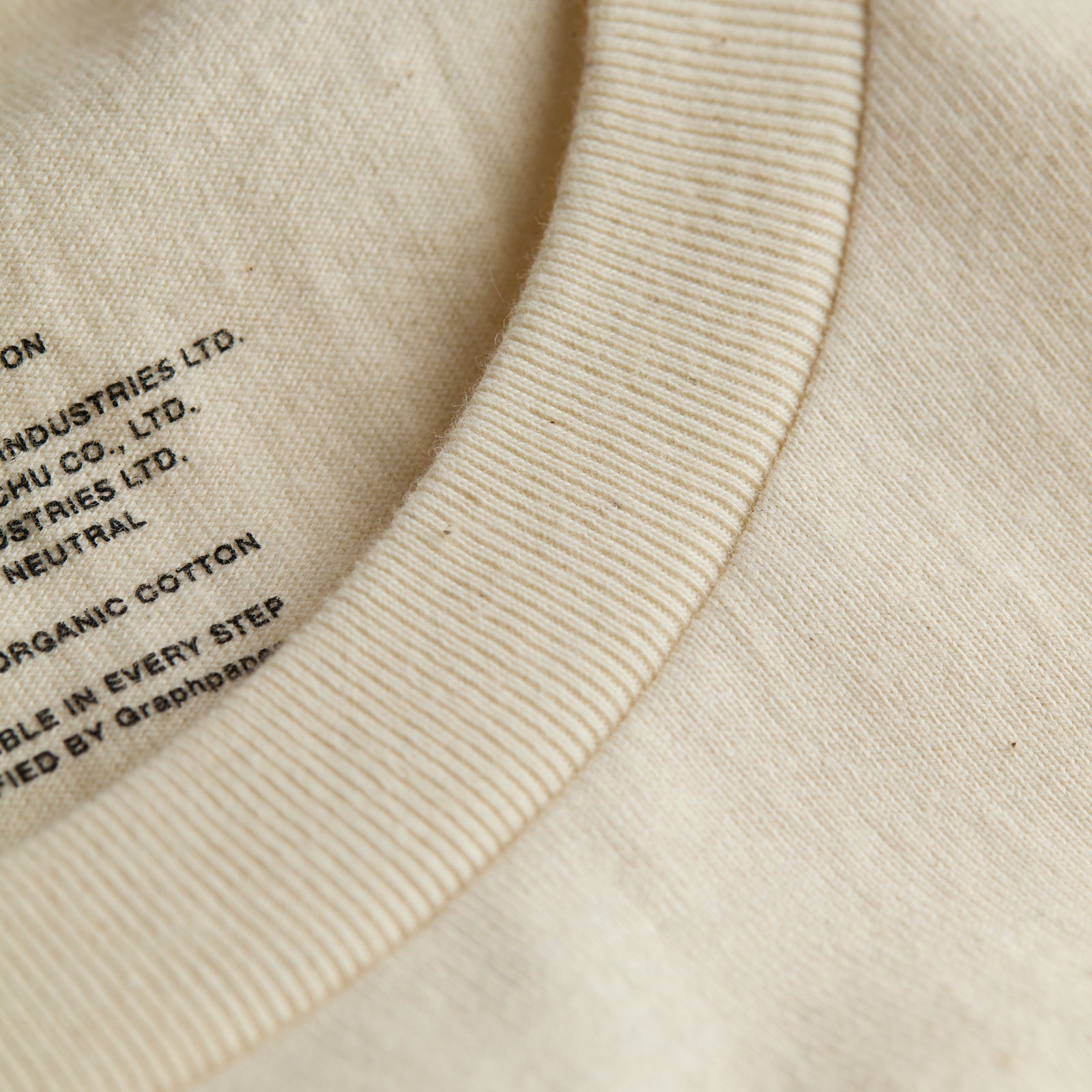
*Due to the use of undyed organic cotton, small traces of natural fiber such as fragments of the cotton plant may be visible. These subtle irregularities are a characteristic of the material.
SKU: CU261-70021
<STORE>
Graphpaper conservatory
1-14-11 Tomigaya
Shibuya-ku Tokyo
151-0063 Japan
TEL. 03-6407-0701
Organic Cotton
TRACEABILITY
Fabric :TAISHOBOSEKI Industries, Ltd.
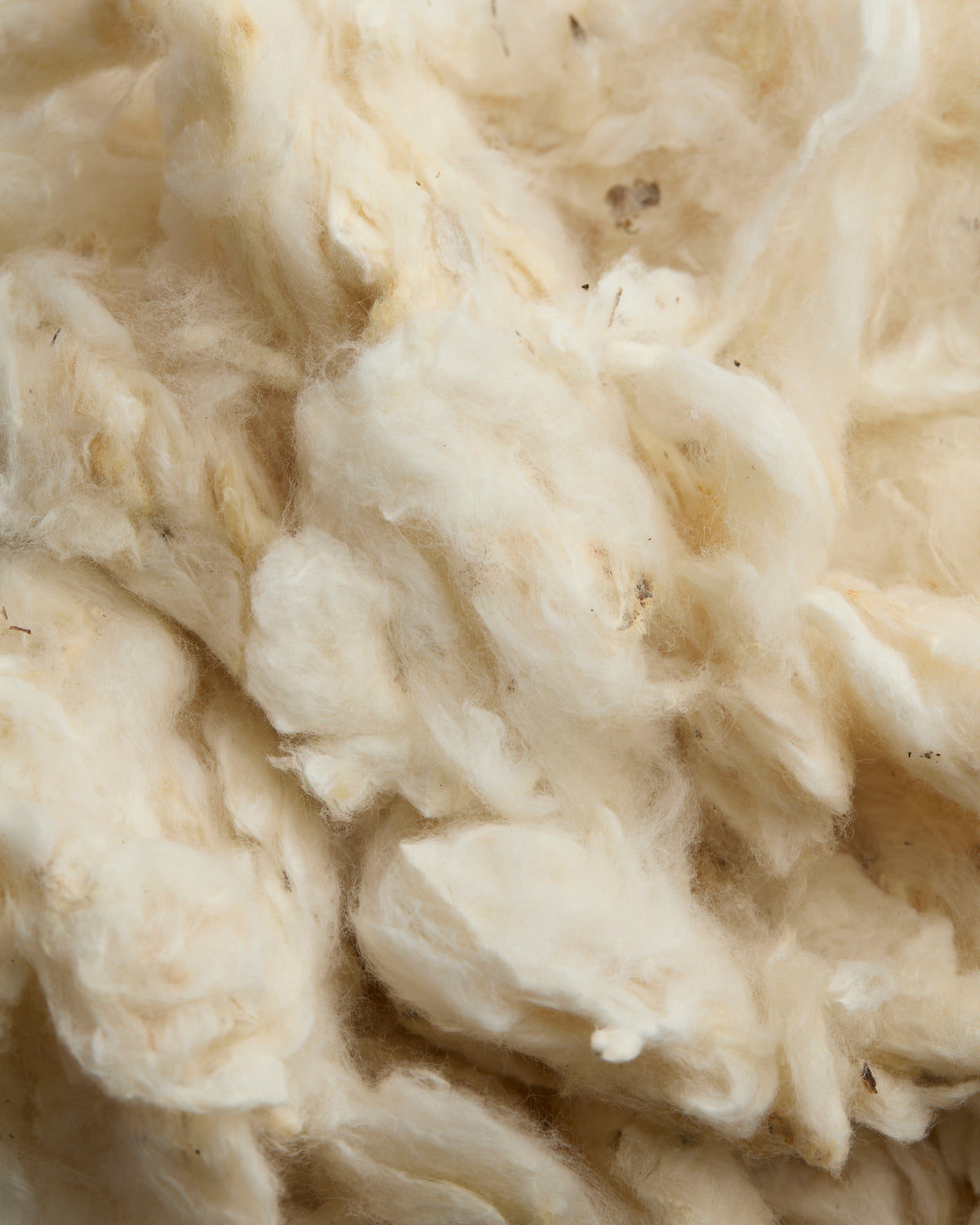
The raw material is GOTS-certified organic cotton, grown by contracted farms under sustainable conditions. It is spun into two-ply yarn and used consistently across the face, middle, and backing threads.
Organic cotton is an agricultural product, cultivated like grains or vegetables. After harvesting, small amounts of natural matter such as fragments of leaves, stems, or seeds can remain in the cotton. These particles are not completely removed during spinning and may appear on the surface of the fabric.
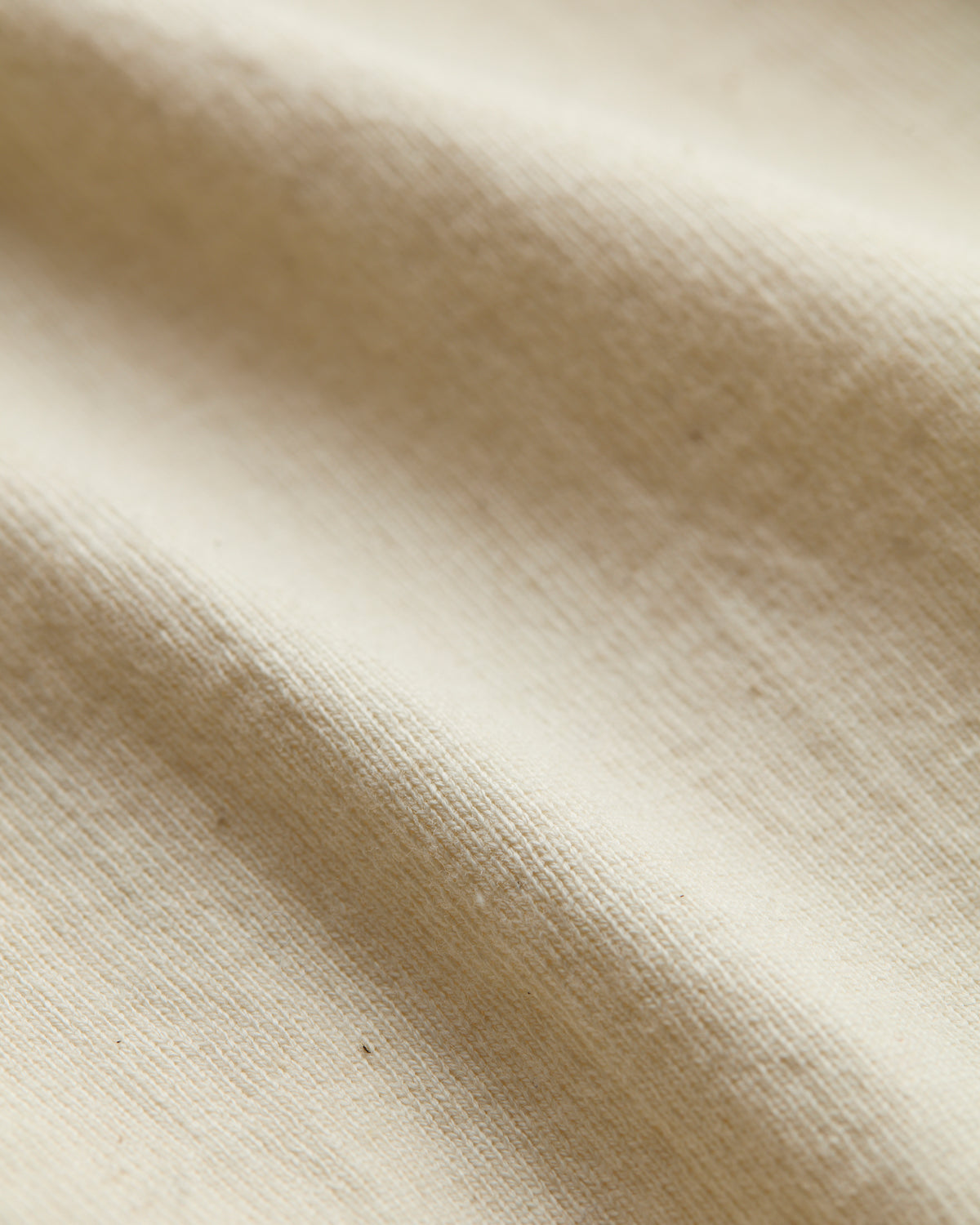
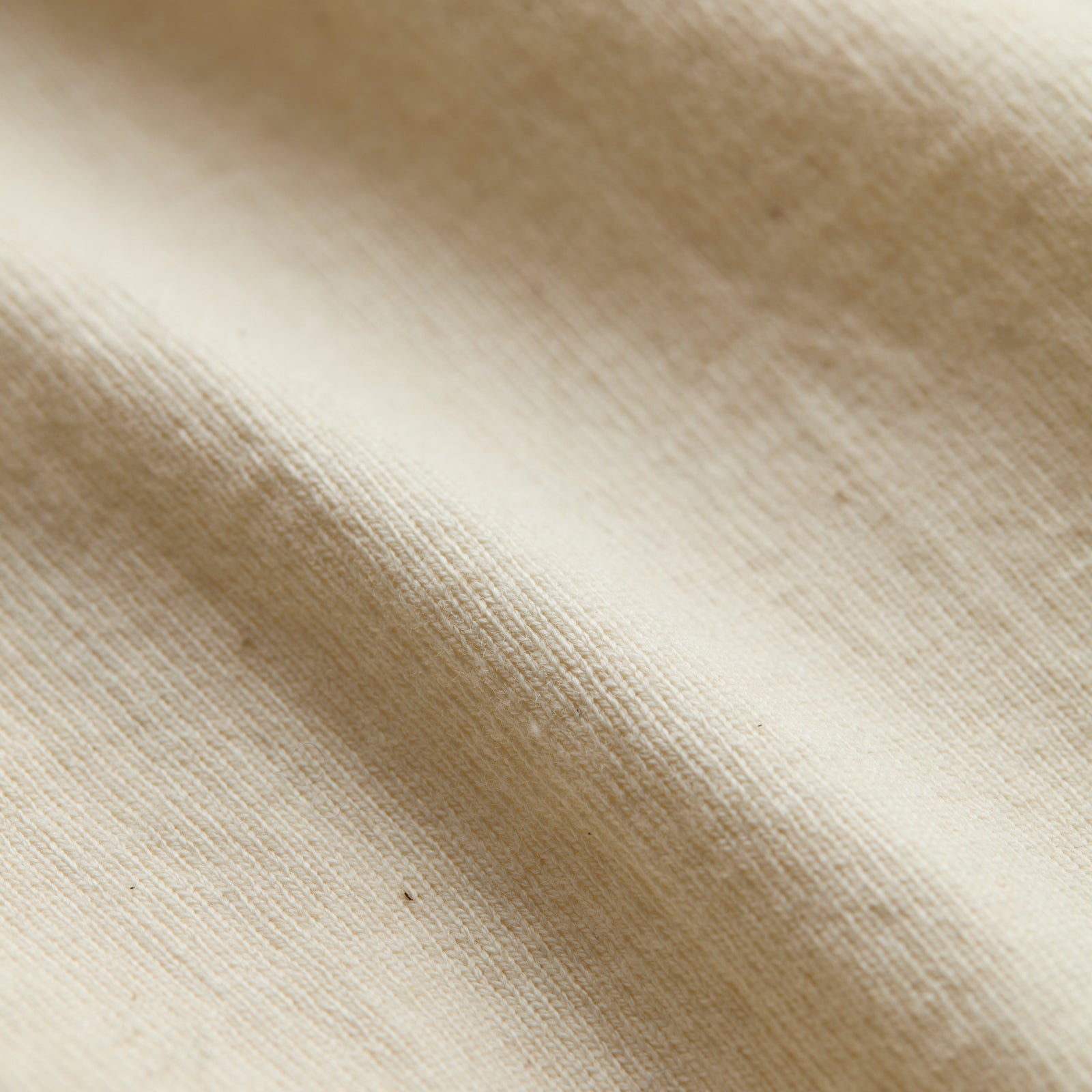
In conventional production, bleaching is used to achieve a uniform white, removing these traces. Here, the fabric is left undyed and unbleached, preserving the cotton’s natural color. As a result, small specks may be visible on the surface. This is not a defect, but a characteristic of the raw material. With repeated wear and washing, these particles gradually become less noticeable, and the texture of the fabric continues to evolve over time.
Knitting|Body :kanekichi_industries Ltd.
Once the industry standard, loopwheel machines disappeared with the shift toward mass production. Inefficient by modern standards, most were discarded. Kanekichi chose to preserve them, continuing to produce fabric the traditional way.
Knitted slowly, the fabric develops a soft, natural texture. With wear and washing, it gradually evolves, gaining character over time—qualities that cannot be replicated through efficiency-driven production.
Today, Kanekichi’s loopwheel fabrics are highly regarded worldwide for their rarity and distinctive quality.
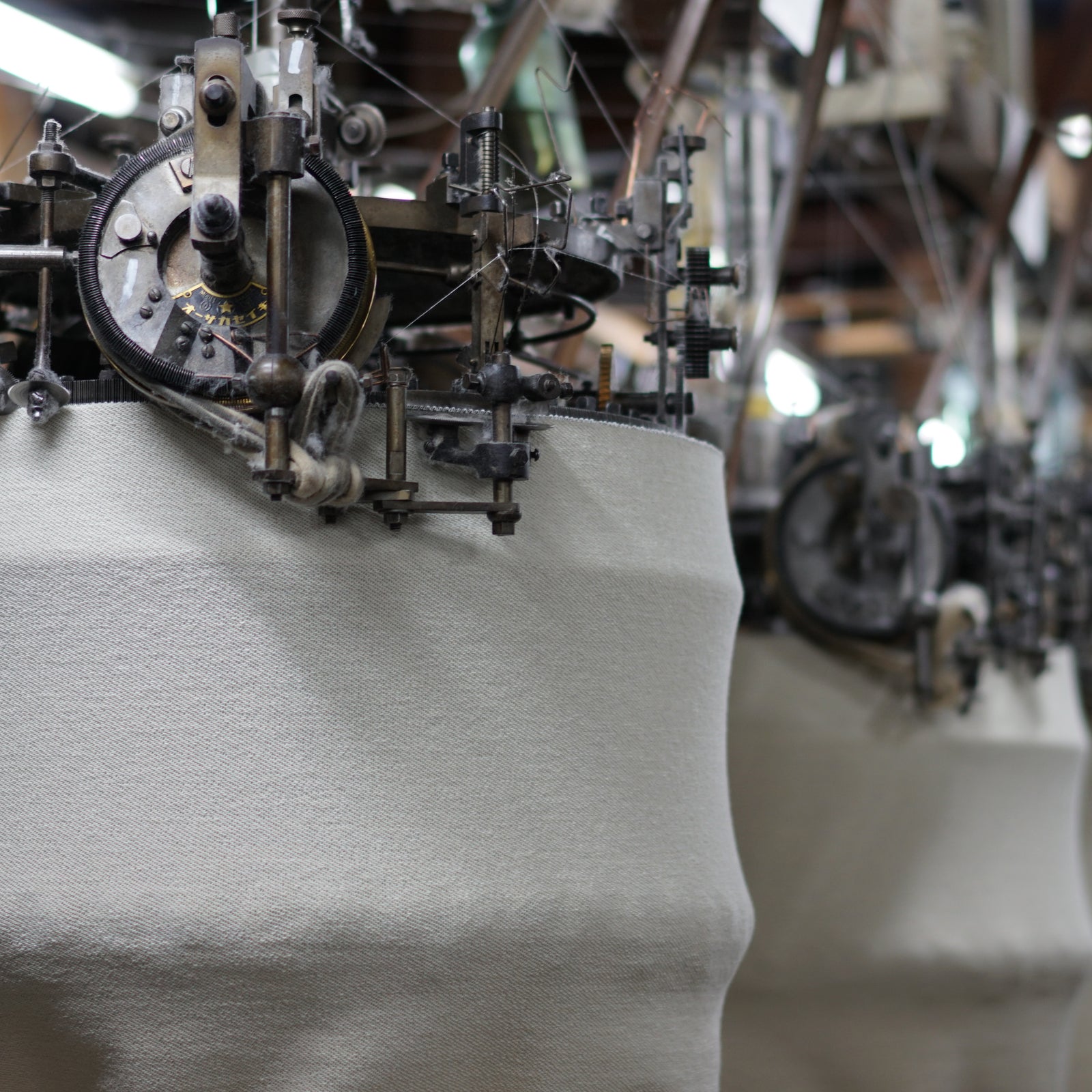
Knitting|Rib :KOMECHU Co., Ltd.
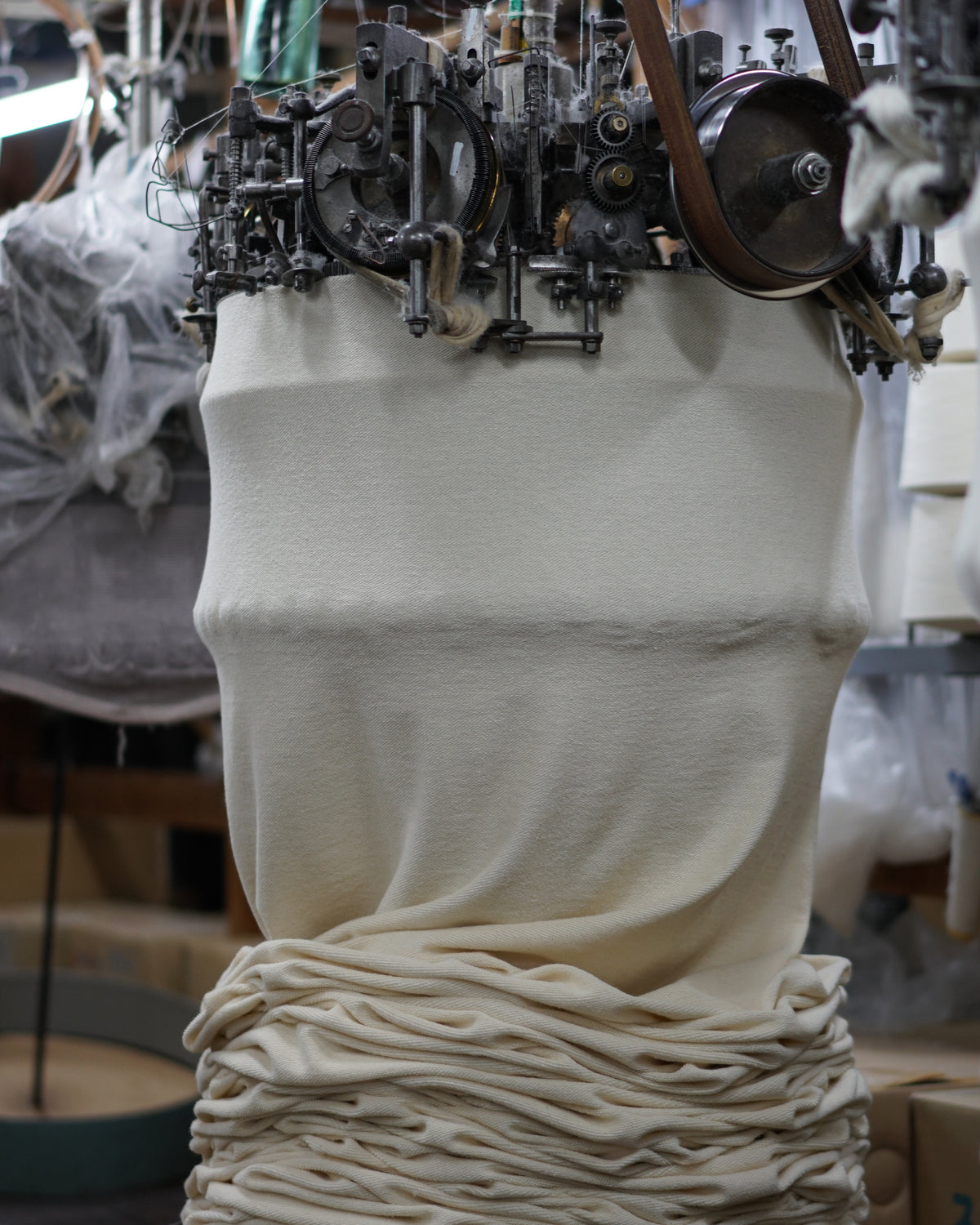
Around 300 machines line the factory floor, each with decades of use. Producing only a few meters per hour, they slowly knit tubular rib fabric with careful attention and time.
Every machine is maintained and adjusted daily by skilled hands. The process is guided not by efficiency, but by precision and intuition.
This manual approach creates subtle irregularities and small variations that give the fabric its unique texture and depth.
HOW TO WASH
Care Instructions
・Machine washable up to 30°C
・Do not use chlorine or oxygen bleach
・Do not tumble dry
・Line dry in the shade
・Iron at a maximum soleplate temperature of 160°C
・Do not dry clean
・Wet cleaning is allowed
Notes:Wash separately from other items.Slight shrinkage may occur after washing.Color fading or transfer may occur due to prolonged exposure to sunlight, friction, or moisture.Use a pressing cloth when ironing.With repeated washing, the fabric will develop its own unique texture.